The Road Ahead 2026: From Ideas to Action
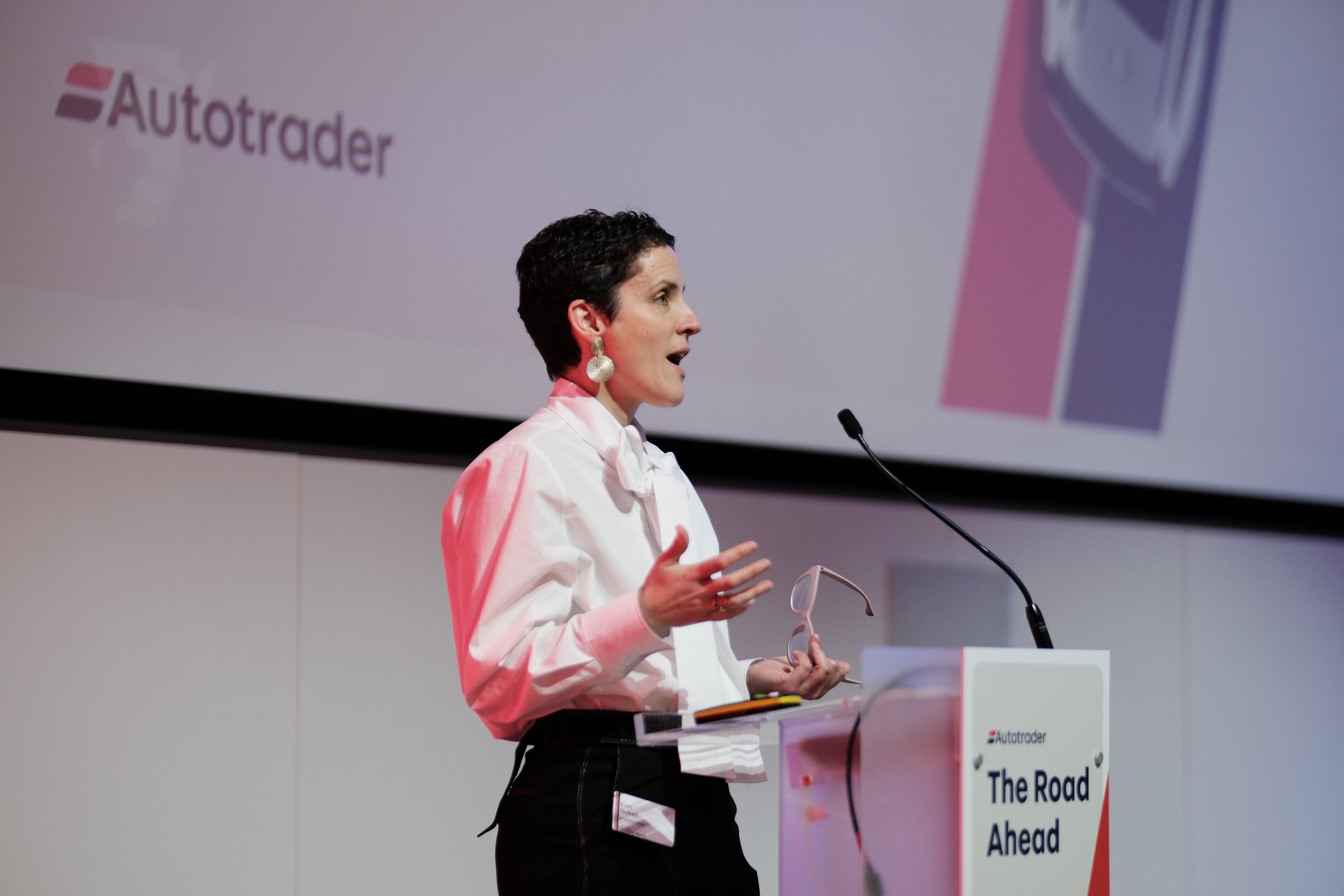
Autotrader’s Editorial Director, Erin Baker, opens the day’s agenda
When the UK’s leading retail chiefs, manufacturers, and global strategists gathered at 30 Euston Square for our third annual Road Ahead for Automotive Retail conference last week, the objective set by event host, Autotrader’s Editorial Director Erin Baker, was clear: less industry hype, and more decisive action.
While previous years focused on forecasting macro trends, this year’s packed, and candid agenda brought together voices from across the automotive and technology landscape—including US analysts Glenn Mercer and Steve Greenfield, alongside retail banking pioneers and forecourt leaders—to tackle the two forces defining 2026: customer retention and turning tech promise into profit.
Across a series of keynotes and panel discussions the day focused squarely on the practical steps retailers must take to protect and grow margins in a rapidly shifting market, highlighting that in today's climate, those who fail to adapt proactively risk being left behind.
In the coming months, we’ll be exploring each session in more detail. But to kick off our series of insights, here’s a wrap-up of the day’s most critical takeaways, and the practical steps you can take now to drive meaningful change.
1. The new rules of retention: convenience over control
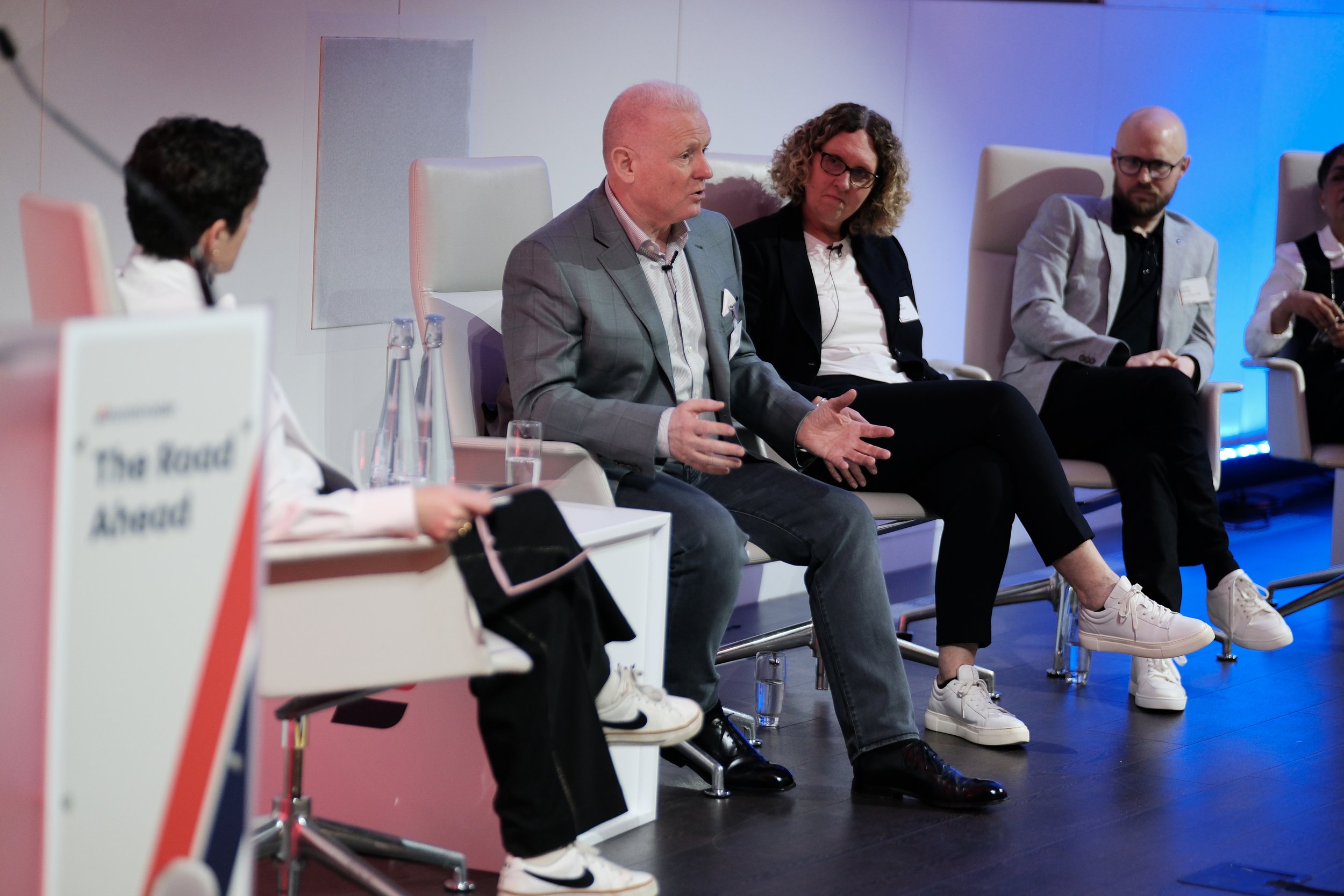
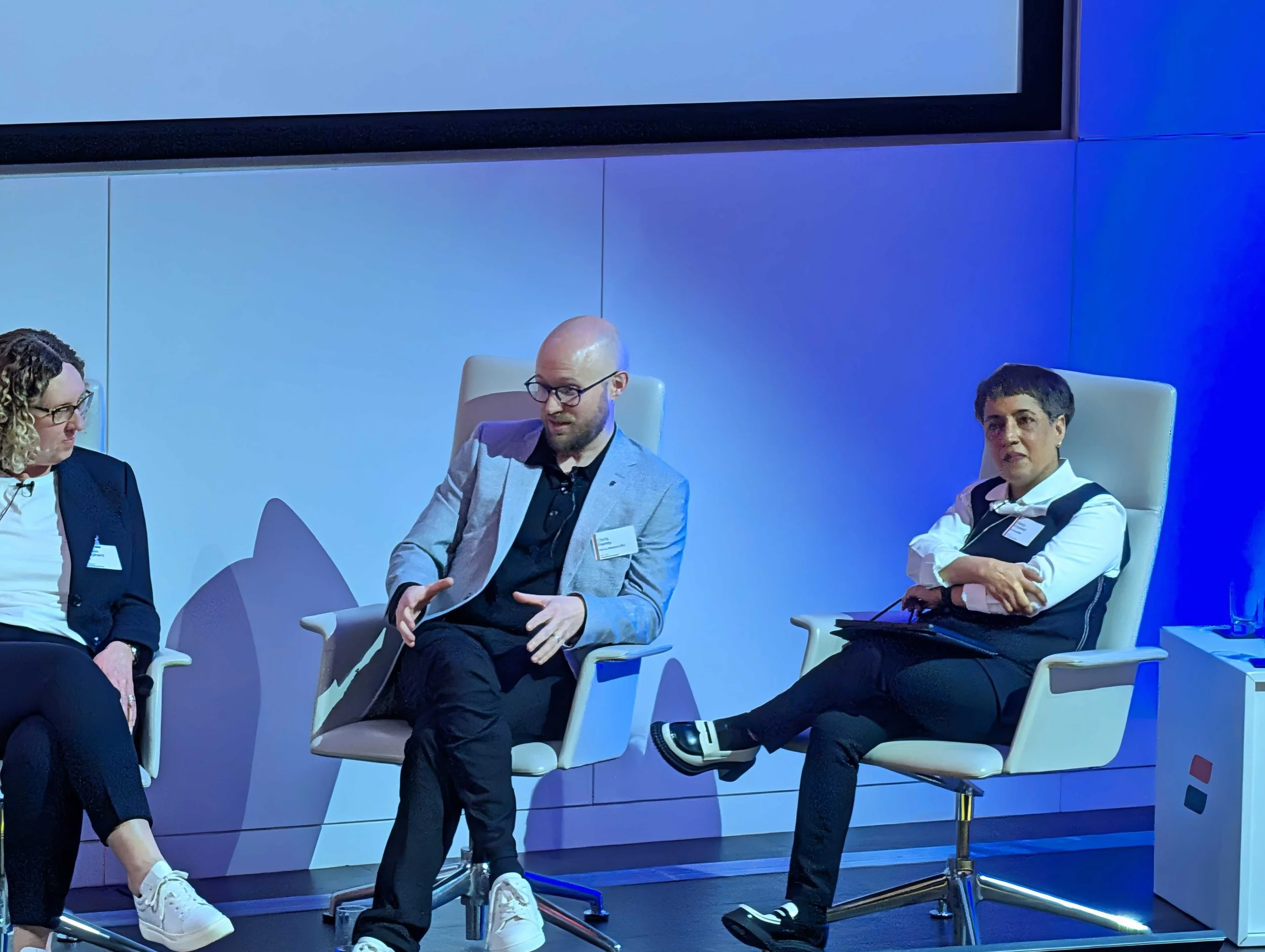
Swansway’s Managing Director, Peter Smyth; JLR Sales Director, Angela Shepherd; Vertu’s Chief Product Officer, Chris Penny; and Geeta Gopalan, join host Erin Baker
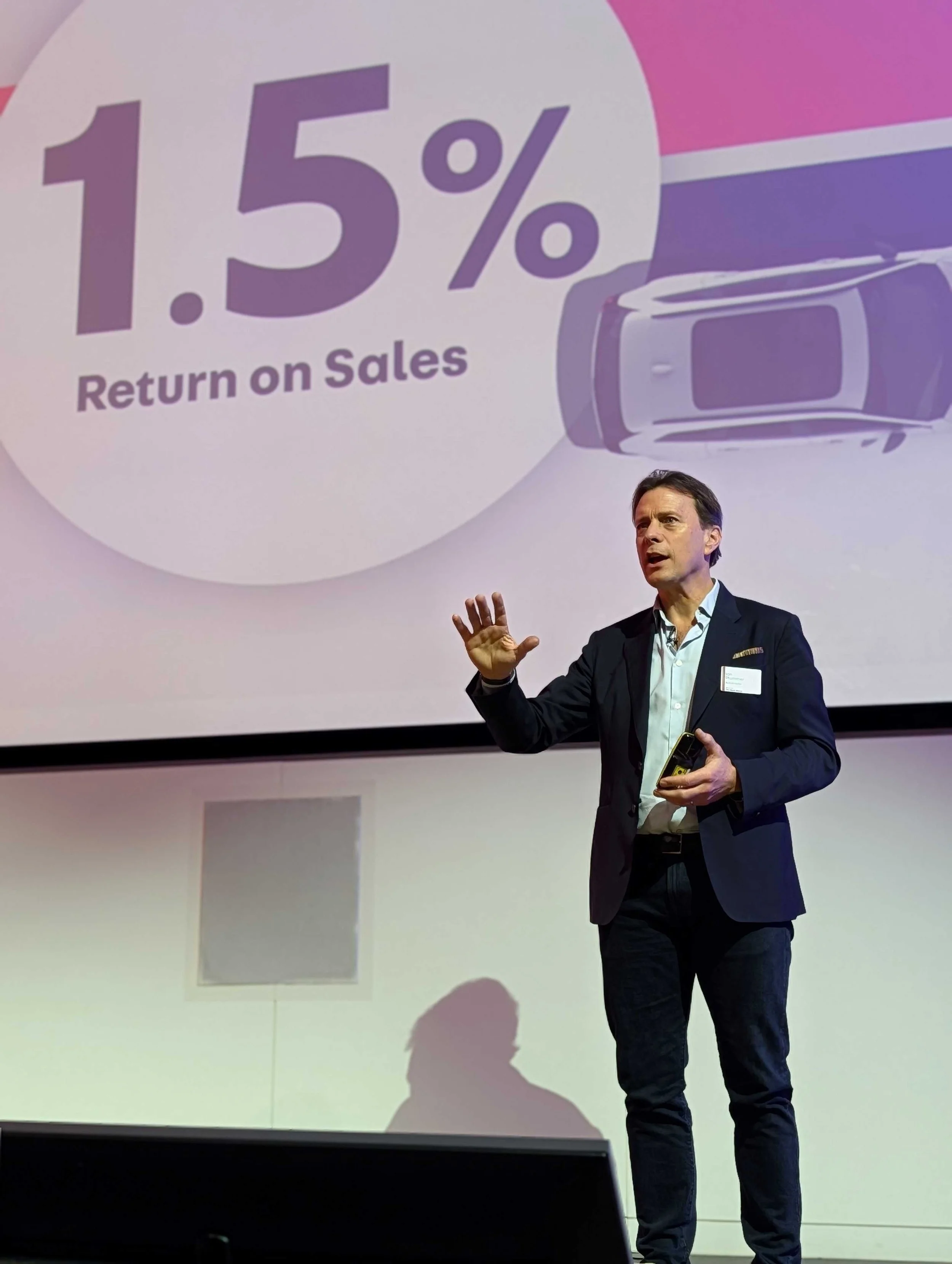
The traditional, linear car ownership journey—where a customer buys a car, services it for three years, and returns to part-exchange it for the same brand—is fading fast. Loyalty rates are declining, falling as low as 36% for new cars, according to Autotrader's Chief Customer Officer, Ian Plummer. Ian also revealed that amid the transition to electric vehicles and a massive influx of new entrant brands only one in five EV buyers currently remain loyal to the brand they previously owned. The implication is clear: consumers have more choice and fewer reasons to stay tethered to legacy habits.
As independent automotive researcher and industry veteran Glenn Mercer highlighted in his keynote, if a customer defects to an independent garage, it’s rarely about price. It’s about convenience. In a world where consumers expect seamless, one-click digital experiences, requiring a customer to bend their day around a rigid service diary is a fast track to churn.
During the Customer Ownership panel, the focus shifted to the forecourt. Peter Smyth, Director at Swansway Motor Group, advocated for approaching older used cars like a "budget airline"—stripping away expensive 'first class' perks like extended warranties to sell cars cheaper, but spinning stock rapidly (up to 14 times a year) under a secondary brand (Motor Match) to capture the highly profitable aftersales "tentacles”. Chris Penny, Chief Product Officer at Vertu Motors, argued that retention doesn't start after the sale; it’s dictated by removing friction from the very first interaction by applying behavioural science. Angela Shepherd, Sales Director at JLR, emphasised that modern luxury and strong approved-used programmes are vital to bridging the gap between new and returning customers.
Geeta Gopalan, Non-Executive Director at NatWest Group and ClearScore, reminded us that true retention relies on "biology and geography"—being physically or digitally where the customer is, and offering services relevant to their specific stage in the lifecycle, between purchases.
Action plan for retailers:
Deploy Instant Cash Offers (ICOs): Integrate ICOs directly into your service lane. As Glenn Mercer noted from his research into US best practice, leading retailers are sourcing up to 25% of their used units this way, often triggering offers when a repair bill hits a specific threshold.
Modernise the aftersales journey: Stop forcing customers to conform to your process. Look at adopting ultra-convenient models, such as mobile service vans or guaranteed next-day drop-ins, to match the frictionless experiences offered by independent fast-fit chains.
Mind the gap: Don't let your CRM go dark between purchases. Use connected car data to offer highly relevant, personalised touchpoints (e.g., specific fault alerts or exact mileage service triggers) rather than generic MOT reminders.
2. Solving the supply squeeze: diversification and triage

Autotrader Director of Motor Finance, Rachael Jones, hosts Nathan Coe (Autotrader, CEO), Craig Strike (Group 1 UK, Operations Director), and Ashley Passant (Greenhous Car & Van, Managing Director)
The supply shocks of the early 2020s have left a lasting mark on the 2026 forecourt. Today, there are 2.4 million fewer 0-5-year-old cars in the UK vehicle parc. Compounding this, the massive growth in fleet leasing (accounting for up to 80% of PHEV/BEV sales) means the traditional flow of high-quality part-exchanges returning to the retailer is drying up.
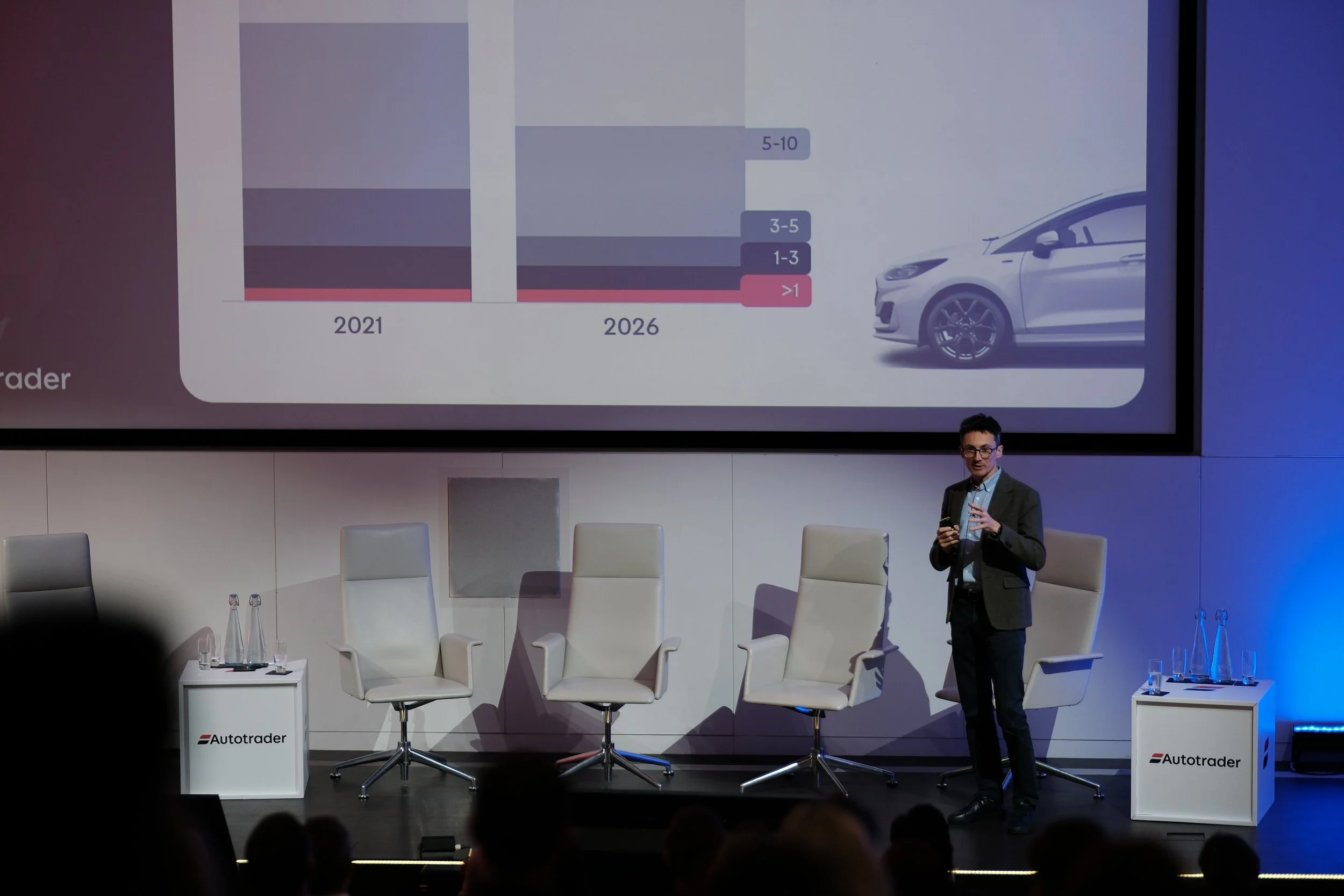
Retailers can no longer rely on the stock profiles that drove their success five years ago. However, as Senior Insights Manager, Emma Willett, and Head of Strategy and Insights, Marc Palmer, revealed in their data deep-dive, many retailers are still sitting on hidden profit. Data shows that thousands of prime, highly retailable part-exchange vehicles are being sent to auction out of habit, only to be snapped up and sold rapidly by independent retailers in the exact same region.
To win in 2026, retailers need to diversify both the age and the brand mix of the vehicles they stock.
During the Looking Ahead strategic panel, the operational realities of this squeeze were laid bare. Autotrader CEO, Nathan Coe, warned that the difference between double-digit growth and squeezed margins this year entirely comes down to strict inventory management, particularly navigating the influx of used EVs.
Ashley Passant, Managing Director of Greenhous Group, shared a highly effective blueprint for diversification—explaining how building an internal ecosystem (including 89 transporters and dedicated refurbishment centres) reduced their route to market from 36 days to just six.
Craig Strike, UK Operations Director for Group 1 Automotive, underscored the importance of adapting internal processes to fit the customer rather than forcing the customer to fit the dealership’s diary.
Action plan for retailers:
Audit your trade disposals (stop the leak!): Stop automatically sending older part-exchange vehicles to auction. Implement a strict triage process using bulk retail check tools to identify prime stock that can be retailed internally, potentially capturing thousands of pounds in missed profit per unit.
Retain and retail older part-exchanges: Instead of sending perfectly good 7-14-year-old vehicles to auction, match them with clear consumer demand. As Chris Penny advised, the gross margin on a £10,000 car is often very similar to that of a £20,000 car, but the return on capital is significantly better.
Embrace new entrant brands: Don't rely solely on legacy manufacturers for younger used stock. According to Marc Palmer, Chinese and other new entrant brands are rapidly filling the supply void, already accounting for one in five electric/plug-in hybrids under a year old.
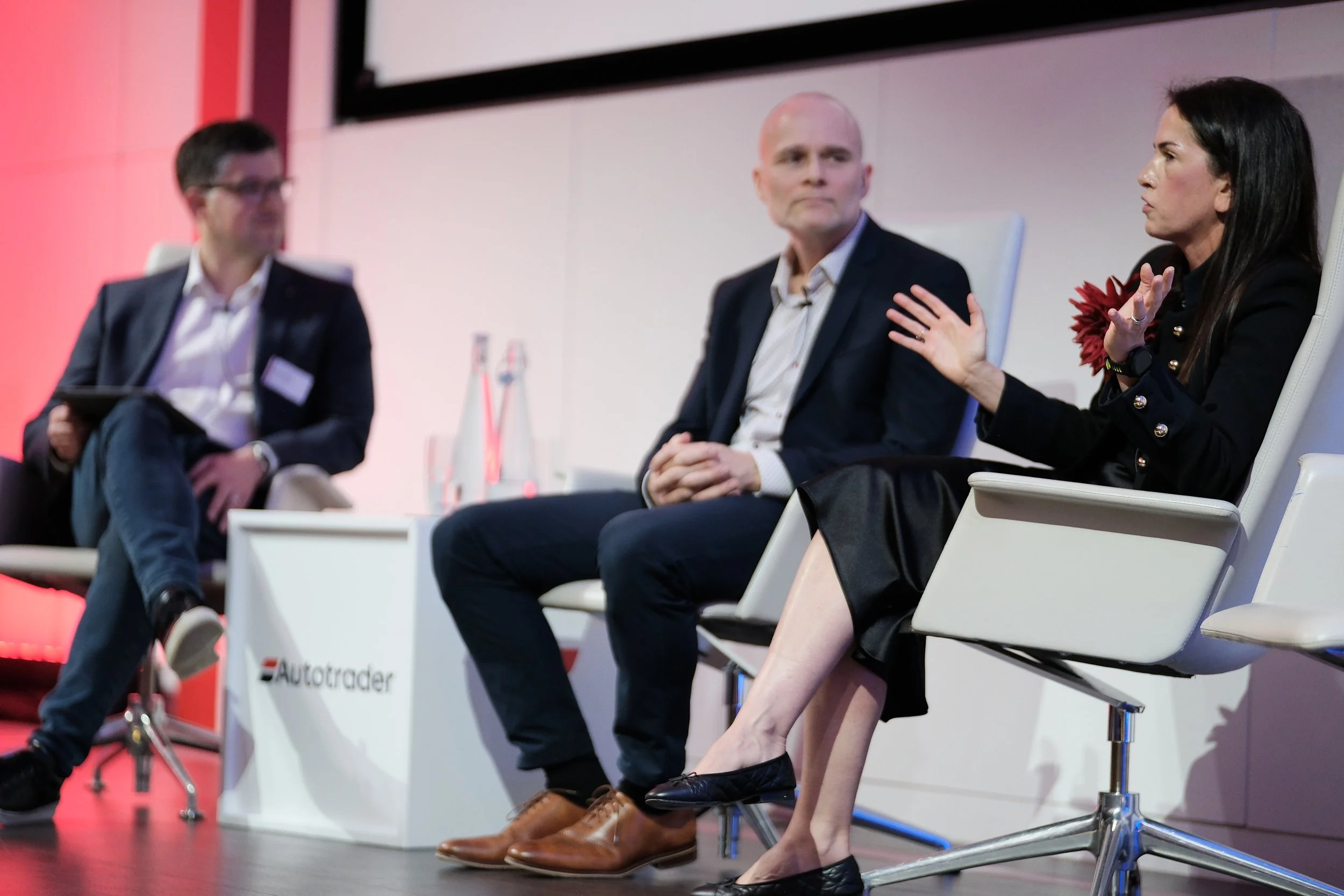
Autotrader Sales Director, Matt Schofield, talks all things AI with Megan Quinn and Steve Greenfield
3. Tech that pays: The digital workforce multiplier
If there was one word that dominated the afternoon, it was AI - but the tone was far from sci-fi hysteria.
In the Is Tech Making Things Harder? panel, hosted by Autotrader Sales Director Matt Schofield, Megan Quinn—investor and former leader at Google and Uber—highlighted the complete collapse of the traditional search model. Consumers are moving away from users typing keywords into a search bar to find a list of links, and instead toward a world where consumers ask an AI assistant a question and receive one single, direct answer.
Steve Greenfield from Automotive Ventures warned that this evolution means retailers need to rethink their digital visibility entirely or risk bleeding web traffic.
Crucially, the consensus across the supplier panel was that AI is not here to replace your showroom staff. It is a "digital workforce multiplier." Its true value lies in automating the mundane, repetitive tasks—moving the boring to the brilliant—so your best people can keep their hands on the tools and their focus on building high-value customer relationships. This is precisely the philosophy behind Autotrader's own tools, where solutions like Co-Driver act as that exact multiplier—automating advert creation to save retailers a combined 20 years of manual drafting since launch.
In the final session, hosted by Autotrader Sales Director Mike Bongiorno, the biggest names in automotive software brought the theory down to earth. Kim Costello, Global CMO at Pinewood Technologies, noted that bolting a shiny new AI tool onto a broken, legacy data system will only result in "system spaghetti." James Drewett, Sales Director for Tekion, agreed, emphasising the non-negotiable need for a single source of truth across operations.
James Leese, Managing Director of Impel.ai, explained how AI transitions the sales team from "chasers to closers" by managing the initial grunt work of lead qualification.
Finally, Hanbo Xie, Co-founder of Revion Technologies, proved that slick demos mean nothing without deep integration, sharing how voice AI in the workshop allows technicians to speak their repair stories and update statuses in real-time, keeping their hands on the spanners and driving pure gross profit.
Action plan for retailers:

James Drewett (Tekion), Kim Costello (Pinewood Technologies Group PLC), James Leese (Impel.ai), and Hanbo Xie (Revion Technologies, Inc.)
Leverage intent data to prioritise leads: Use tools like Autotrader’s Buying Signals to identify buyers with the highest propensity to purchase. When data does the triage, your team can focus their energy on high-quality leads, which convert at up to four times the normal rate.
Mystery shop your AI presence: Do not rely on old SEO metrics. Actively query ChatGPT and Google's AI Overviews (e.g., "Where should I buy a used EV in my town?"). If your competitors are showing up in the AI-generated answers and you aren't, you are bleeding web traffic.
Automate the "front door": Up to 50% of inbound dealership calls go to voicemail or are abandoned. Deploy AI voice attendants to handle basic incoming queries (hours, service scheduling, vehicle availability) 24/7. This instantly boosts customer satisfaction and acts as a tireless co-pilot for your team.
The Road Ahead
The overarching message from the Road Ahead 2026 event is one of pragmatic optimism. The market has undoubtedly become more complex, but the tools available to navigate it have never been more powerful. The spoils will go to the retailers who stop waiting for the market to normalise and instead take active, deliberate steps to adapt their inventory, rethink their customer touchpoints, and leverage technology to empower their teams.
Watch this space. This is just the beginning of the conversation. Over the coming weeks, we will be diving deeper into the specific strategies discussed at the event.
Look out for our upcoming deep-dive into Steve Greenfield’s Top AI Trends for Retailers.
Find out the One KPI Retail Leaders Must Focus on in 2026, featuring exclusive insights from Autotrader CEO Nathan Coe, Group 1's Craig Strike, and Greenhous Group's Ashley Passant.
Watch our ultimate 'One Big Myth' compilation video, featuring rapid-fire answers from all our speakers on the biggest misconceptions in automotive retail today.
Unpack Glenn Mercer’s three Practical Levers you can pull today to safeguard your customer base.